| Sign Up For Our Newsletter |

| Sign Up For Our Newsletter |
Probability - CCSS 6.SP.B.1, 6.SP.B.2, 6.SP.B.3, 6.SP.B.5
Links verified on 12/12/2023
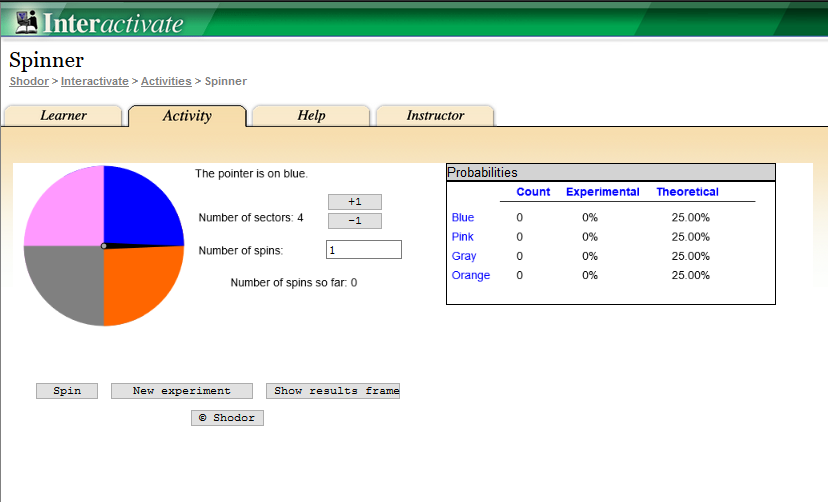
1. Adjustable Spinner.
Click Image to Enlarge
Students can create a game spinner with variable sized sectors to look at experimental and theoretical probabilities. Parameters: Sizes of sectors, number of sectors, number of trials. (Related resources under learner tab.) SEE MORE
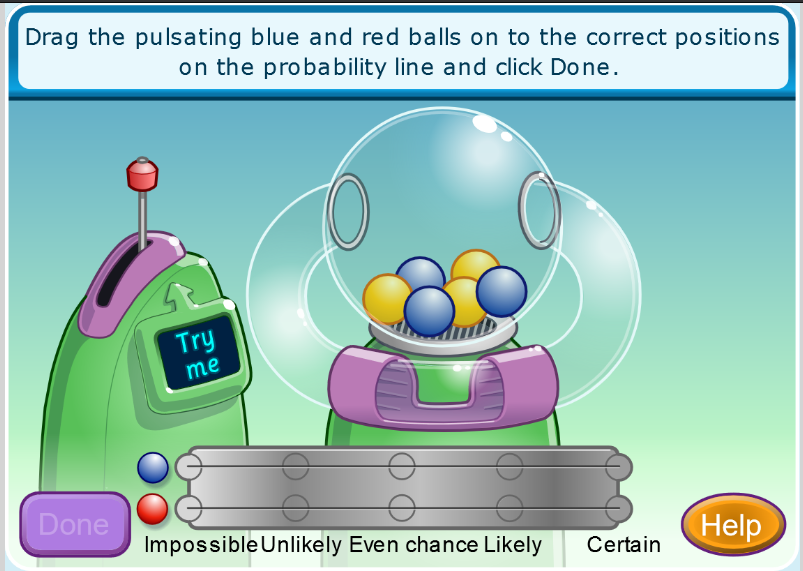
2. Ball Picking Machine.
Click Image to Enlarge
Two color balls are given, and you have to estimate the chance of them being picked by the machine by dragging the balls on to the correct positions on the probability line. SEE MORE
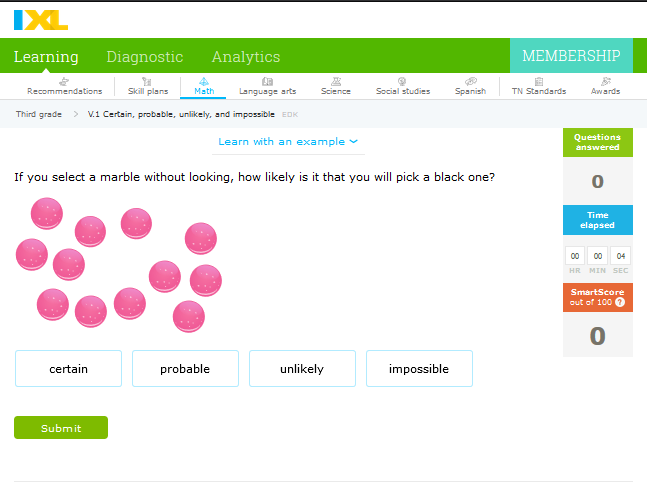
3. Basic Probability Practice.
Click Image to Enlarge
In this game questions will appear in the form of "How likely is it that..." along with diagrams. You can select your answer from four options: Certain, Probable, Unlikely and Impossible SEE MORE
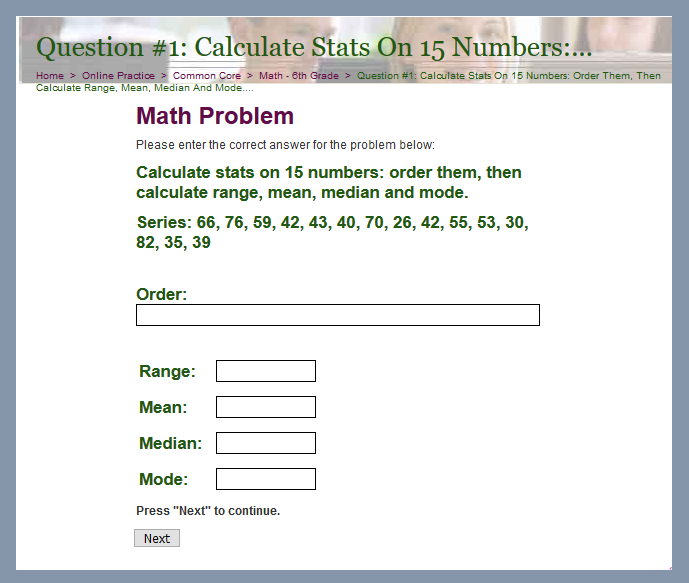
4. Calculate Stats on 15 Numbers.
Click Image to Enlarge
Order them, then calculate range, range, mean, median and mode. A self-checking quiz. SEE MORE
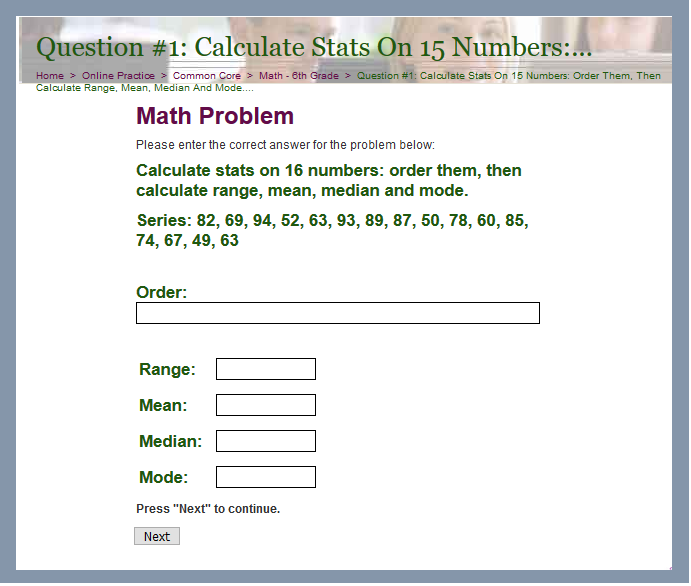
5. Calculate Stats on 16 Numbers.
Click Image to Enlarge
Order them, then calculate range, mean, median and mode. A self-checking quiz. SEE MORE
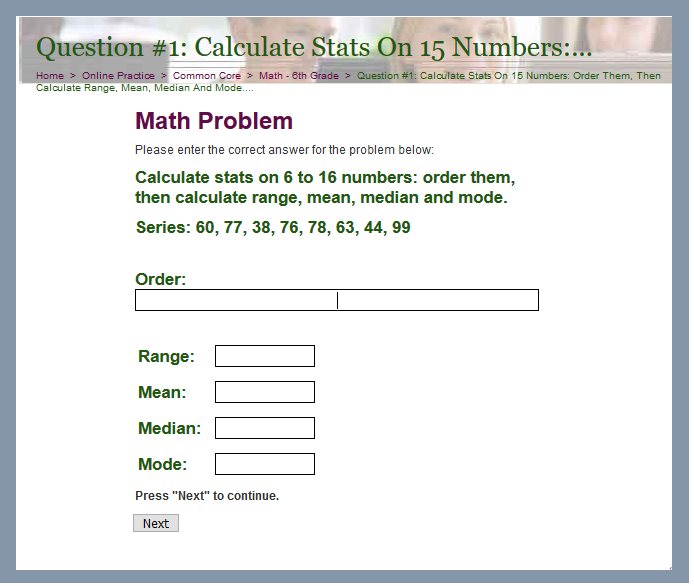
6. Calculate Stats on 6 to 16 Numbers.
Click Image to Enlarge
Order them, then calculate range, mean, median and mode. A self-checking quiz. SEE MORE
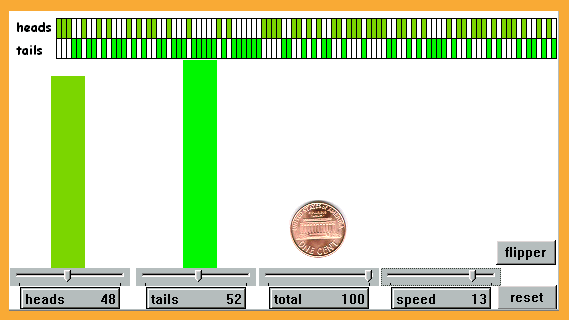
7. Coin Flip.
Click Image to Enlarge
This coin flipper builds a column graph one flip at time - let your students see the progression as data is generated and collected. If you cannot see the project after the page is fully loaded, please download the new version of the free MicroWorlds Web Player (plug-in). SEE MORE
8. Coin Toss.
Click Image to Enlarge
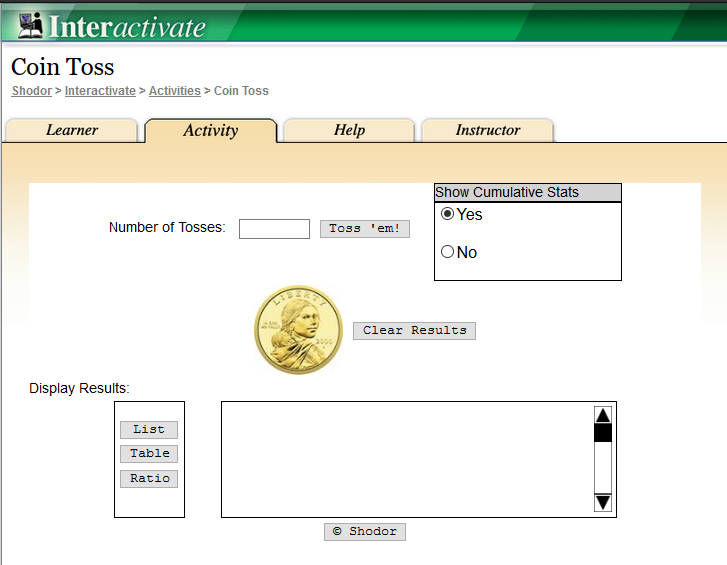
Toss enough coins to make a prediction about probability (maximum number of tosses 1000, but you can keep tossing to get a larger data set). SEE MORE
9. Free Online Probability Math Games.
Click Image to Enlarge
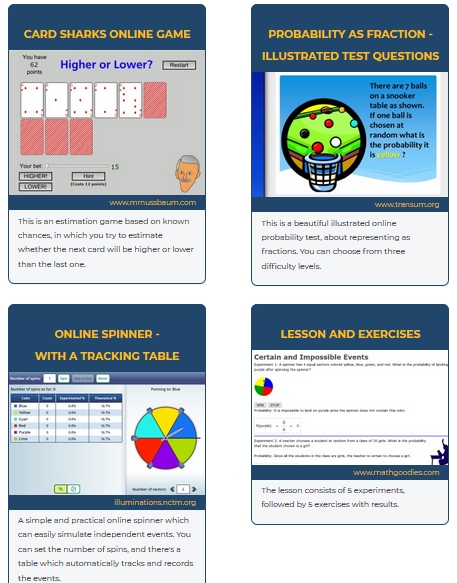
Twenty three opportunities for your students to learn about and demonstrate their proficiency in probability. Some of the exercises give students a group of items, and they’ll be asked to determine the chance of selecting each one. Others are in the form of word problems and can help prepare students for math tests or quizzes, which ask questions in a similar format. SEE MORE
10. Marbles.
Click Image to Enlarge
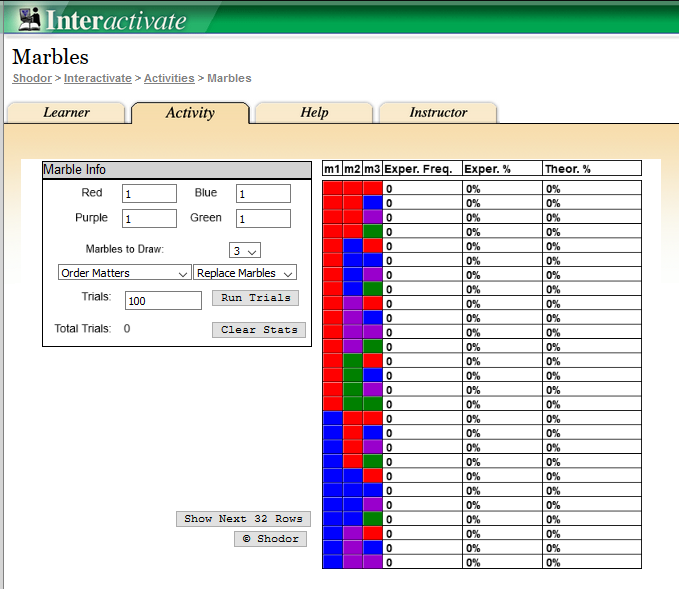
Students learn about sampling with and without replacement by modeling drawing marbles from a bag. Parameters: Number and color of marbles in the bag, replacement rule. (Related resources available under the learner tab.) SEE MORE
11. Spy Guys Interactive - Probability.
Click Image to Enlarge
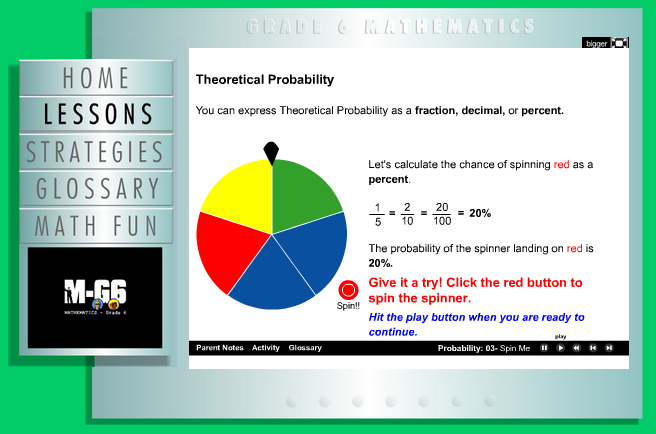
Watch the video and respond at various places Lesson 19 . This video includes sections which ask students to input responses. SEE MORE
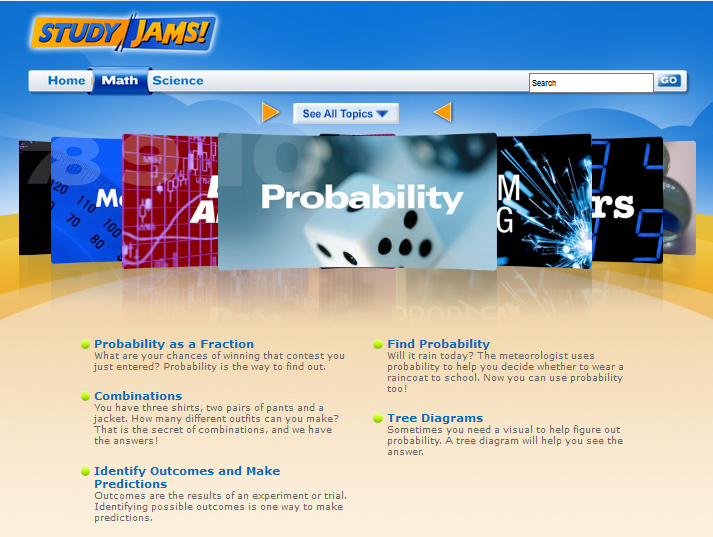
12. StudyJams! Probability.
Click Image to Enlarge
Click "see all topics" and choose Probability. You will find lessons that include key vocabulary, step by step guides and test. SEE MORE
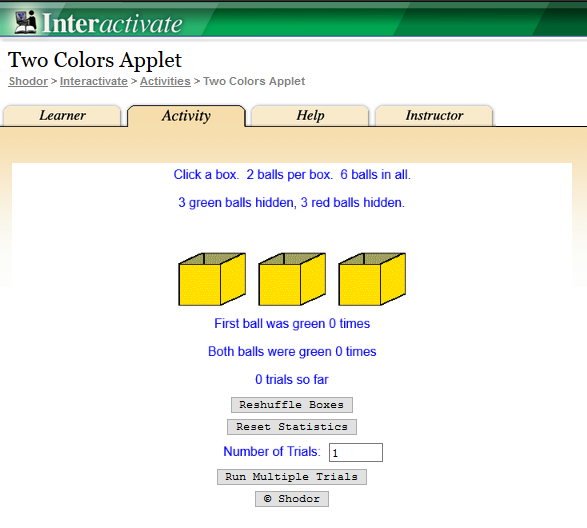
13. Two Colors.
Click Image to Enlarge
Students choose between three boxes and choose one marble from the box to look at conditional probabilities. SEE MORE
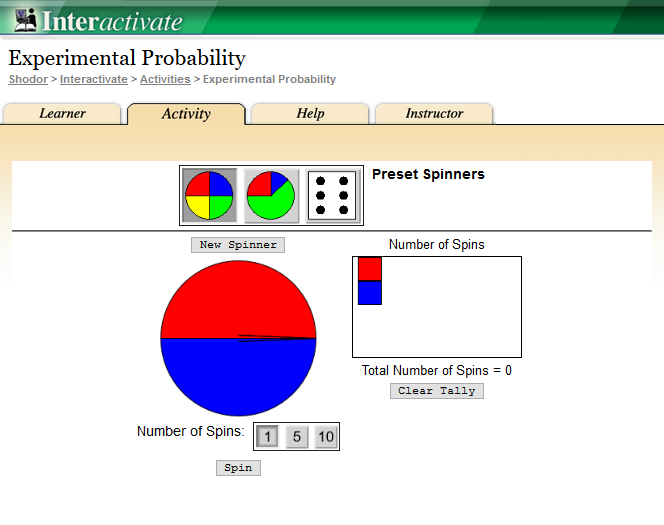
14. Understanding Experimental Probability.
Click Image to Enlarge
Experiment with experimental probability using a fixed size section spinner, a variable section spinner, 2 regular 6-sided number cubes or design your own number cubes. SEE MORE
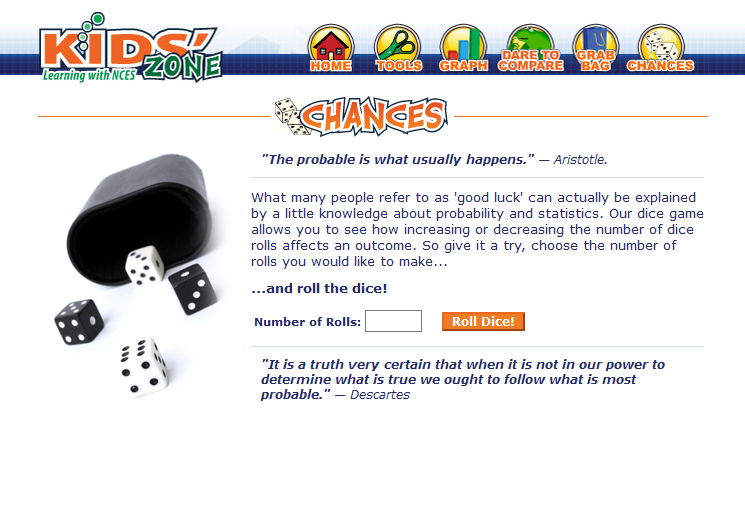
15. What Are Your Chances.
Click Image to Enlarge
What many people refer to as 'good luck' can actually be explained by a little knowledge about probability and statistics. See how increasing or decreasing the number of dice rolls effects an outcome. SEE MORE

Internet4classrooms is a collaborative effort by
Susan Brooks and Bill Byles.


advertisement
advertisement
Use of this Web site constitutes acceptance of our Terms of Service and Privacy Policy.